Flights: From Click-Out to Native Funnel
AGODA | Global Head of Product Design, Agoda
Timeline: 2019 – 2026
Team: 5 product designers + Senior Product Design manager
My Role
I led the product design team behind Agoda's Flights product — taking it from zero to one of the leading flight booking experiences in Southeast Asia. As Head of Design for APAC, my focus was on building the right conditions for designers to do their best work, partnering closely with product, engineering, and business stakeholders to shape a product that was both intuitive for travelers and built to compete at scale.
Leadership
Cross-Functional Alignment
Air Cover
Team Setup

The Opportunity & Strategic Approach
Platform transformation
Agoda's competitors were bundling flights and hotels into full-service travel platforms. Flights wasn't optional — it was the missing piece needed to keep travelers from going elsewhere.
Own the full trip
Travelers don't just book hotels — they book trips. The opportunity was to become the single place where customers could plan and book everything, without leaving Agoda.
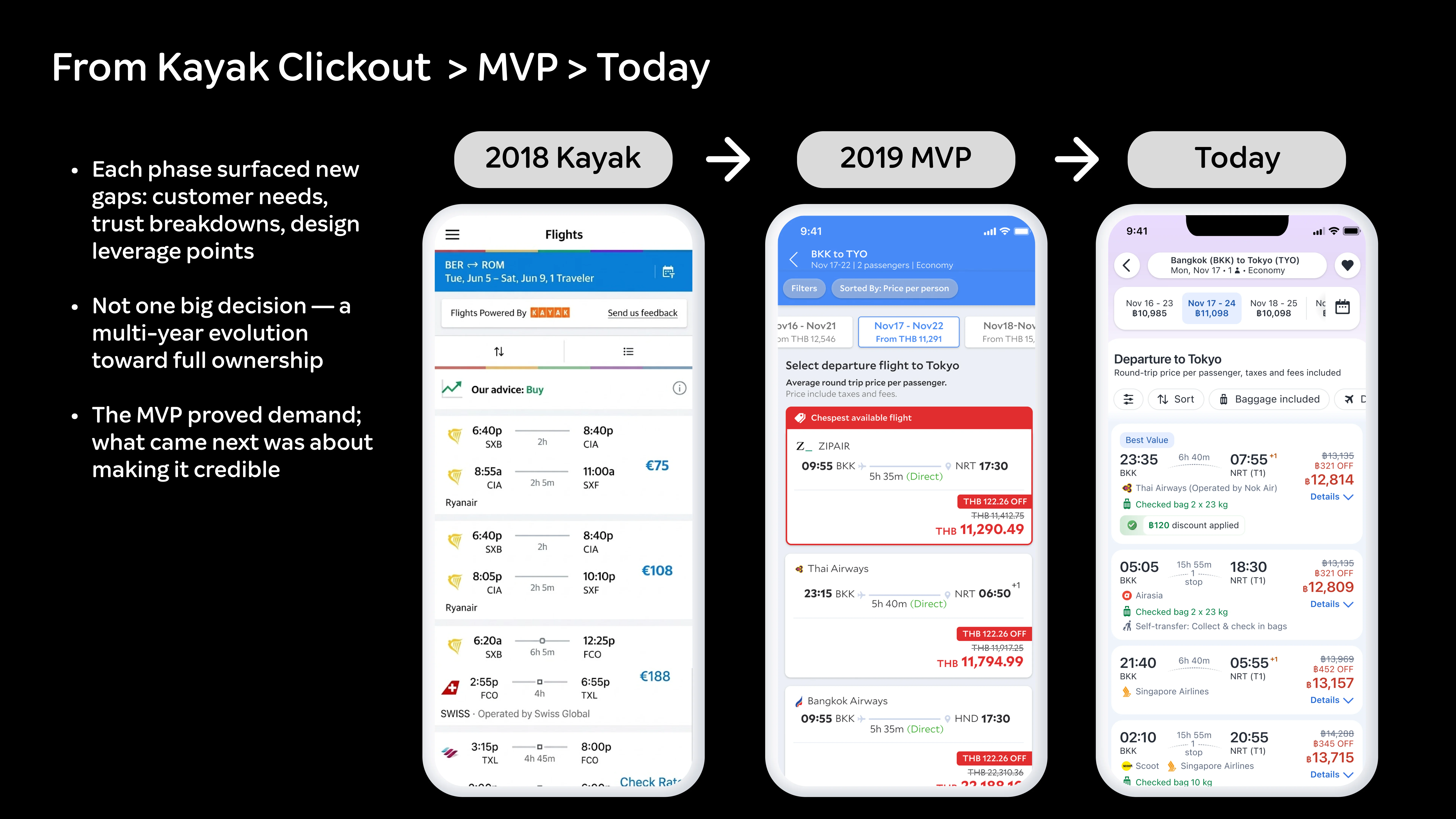
From click-out to native experience
Flights was sending customers to Kayak to complete their booking. It was functional, but it didn't feel like Agoda — and it handed off ownership of the customer at the most critical moment.
Build trust in a high-stakes category
Flights is price-sensitive, complex, and high-consideration. Every step — from search to booking to post-purchase — had to earn customer confidence, not just complete a transaction.
Compete on experience, not just supply
Trip.com and Traveloka were investing heavily in flights UX. To win in SEA, Agoda needed a product that matched their depth and felt credibly native — not a bolt-on.
Turn a gap into a growth platform
The goal wasn't to ship a flights tab. It was to transform Agoda from an accommodation platform into a full-travel product — and design was central to making that shift credible.
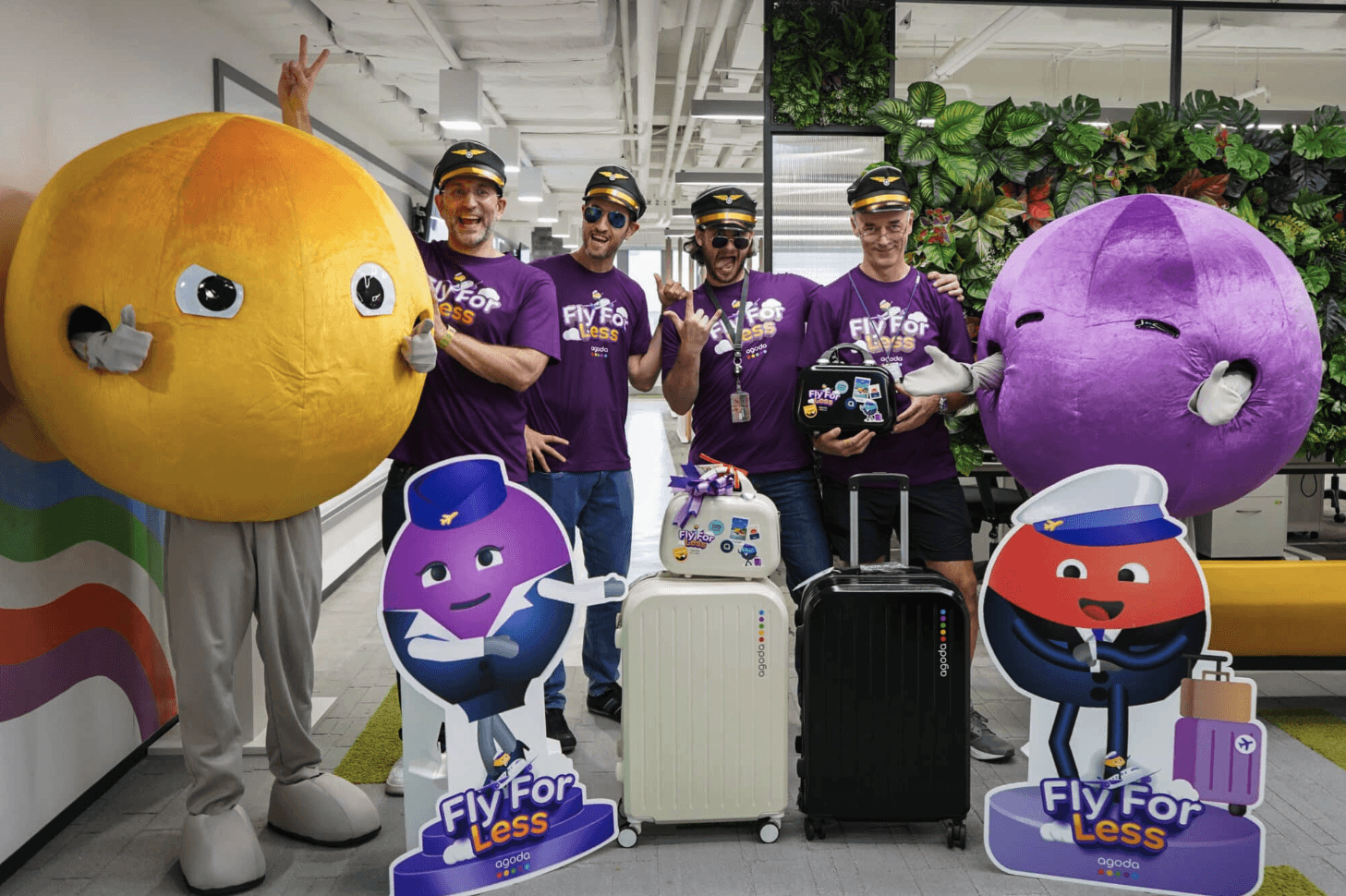
Building a flights design team from zero — and setting it up to lead.
Foundation
Built the team structure and culture to support both short-term delivery and long-term platform ambition. A Senior Design Manager led day-to-day, with five embedded designers working closely with product and engineering — and my involvement focused on milestones, quality, and strategic alignment.
Strategy
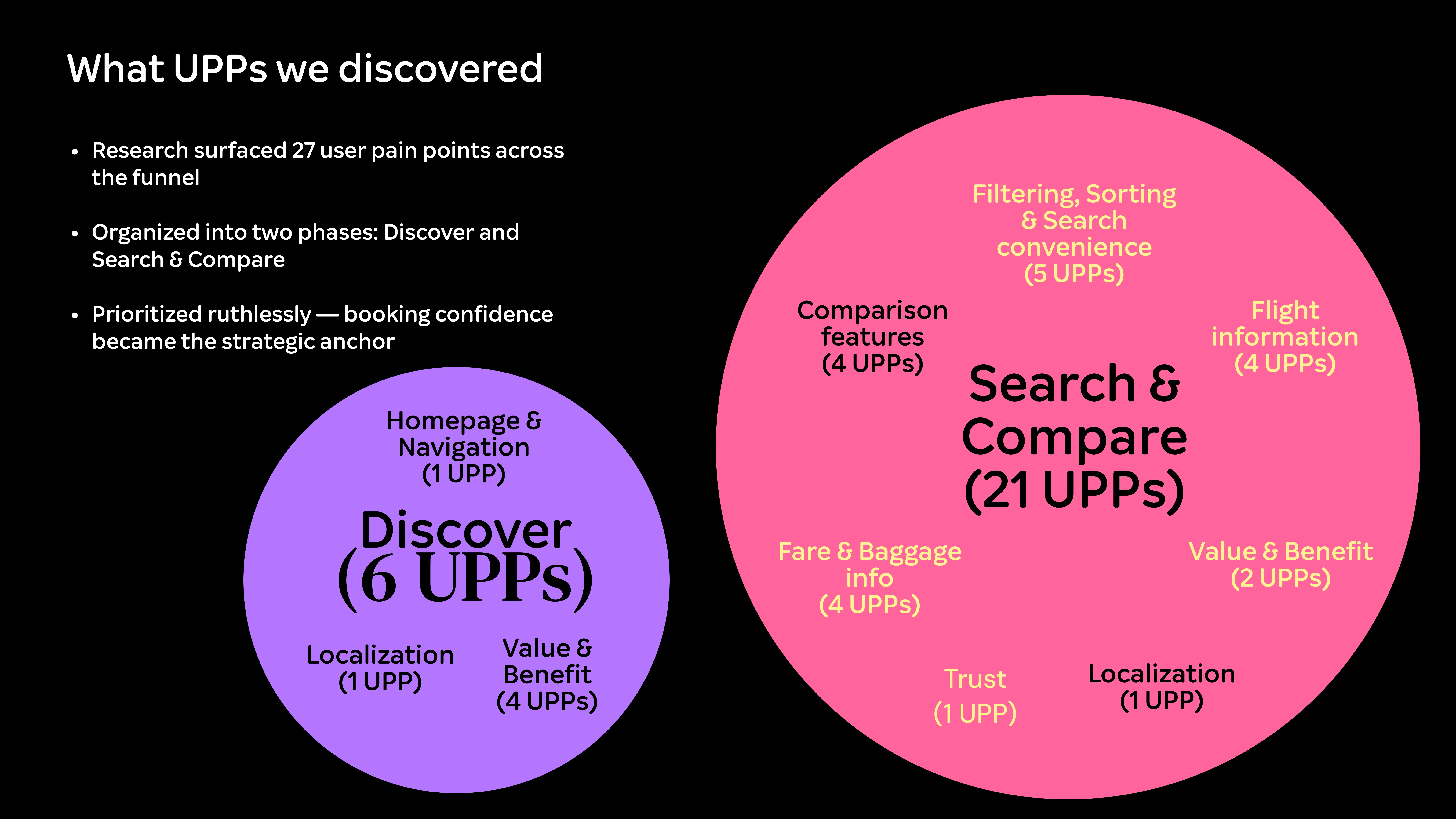
Identified user pain points and competitive gaps across the leading APAC flight platforms. Worked closely with product, tech, and marketing to shape a design strategy aligned with Booking Holdings' goal of growing market share and making Flights a profitable, multi-trip driver for Agoda.
Scale
Designed leadership conditions where the team could make great decisions without escalating everything. Quality was maintained through regular design reviews and a functional connection to the broader design org — not through control, but through clarity and coaching.
The Design Strategy & Key Decisions
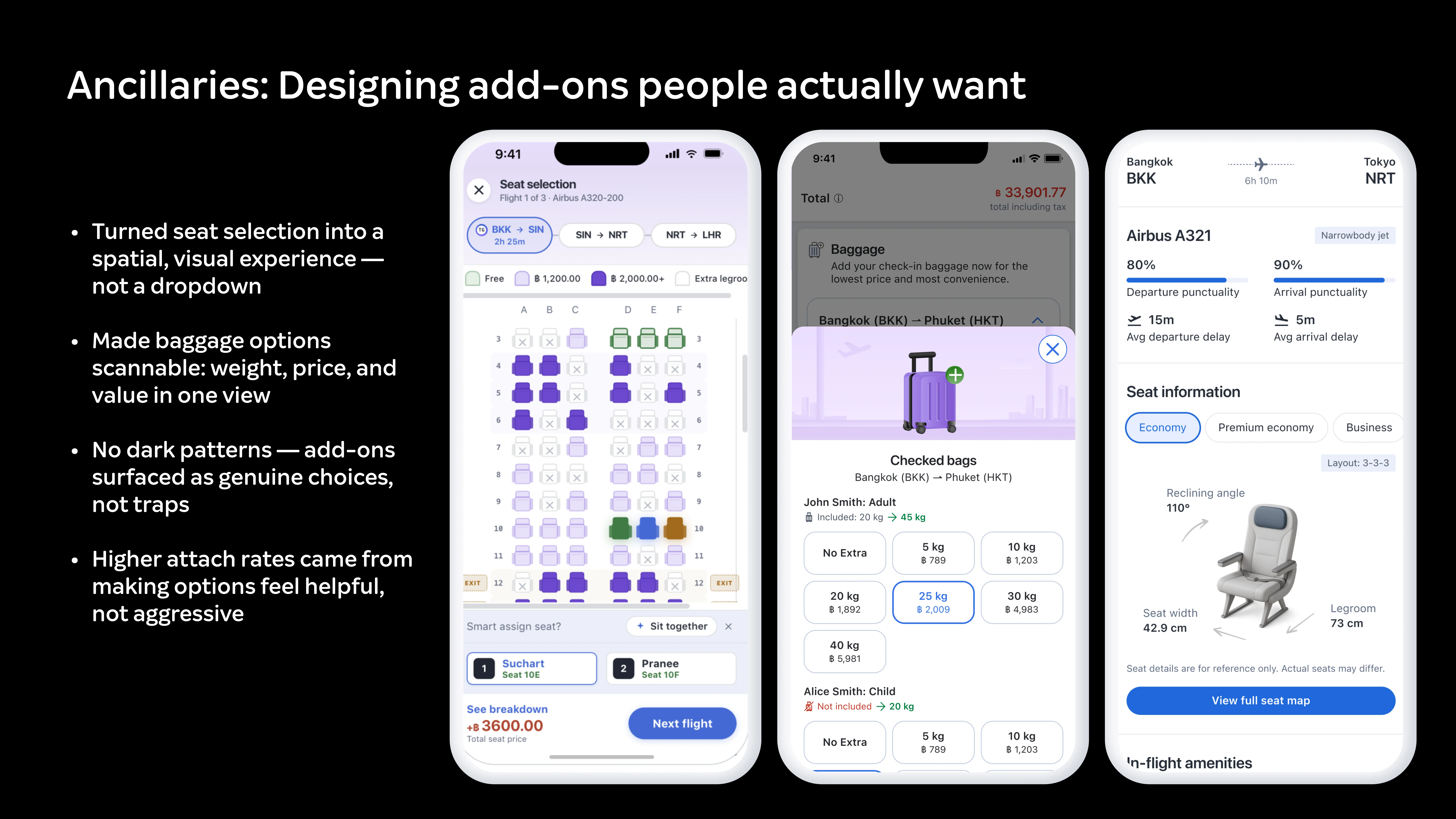
Reduce decision complexity for the customer
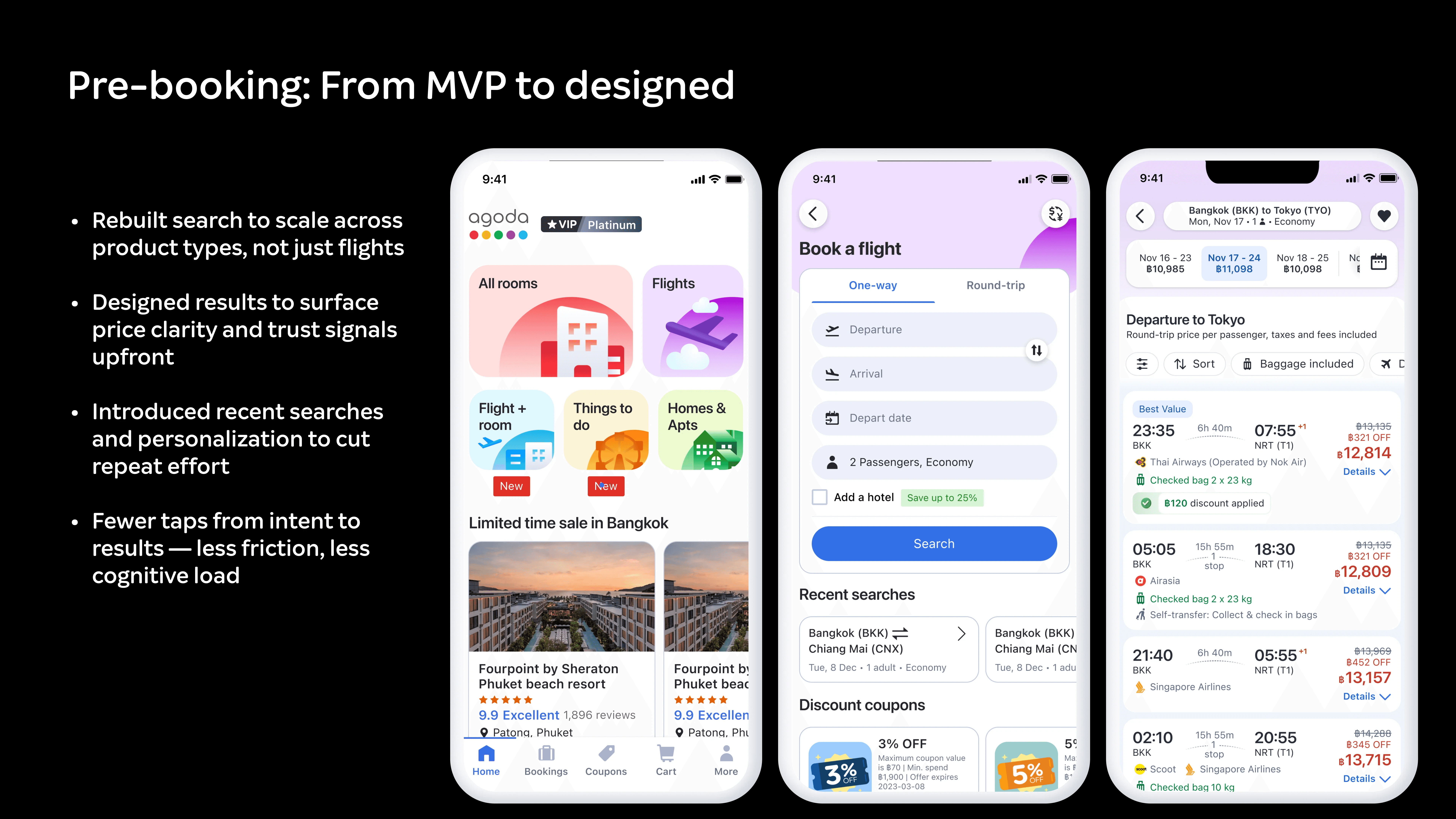
Flights is a high cognitive-load category. Customers are simultaneously comparing prices, times, airlines, baggage rules, and flexibility options — often under time pressure. The instinct in product design is to surface everything. I pushed the team to do the opposite.
Build trust through clarity, not conversion tactics
In Flights, trust is as important as efficiency. What I pushed for was an experience that felt transparent, dependable, and easy to understand — especially around pricing, fare details, policies, and change management.

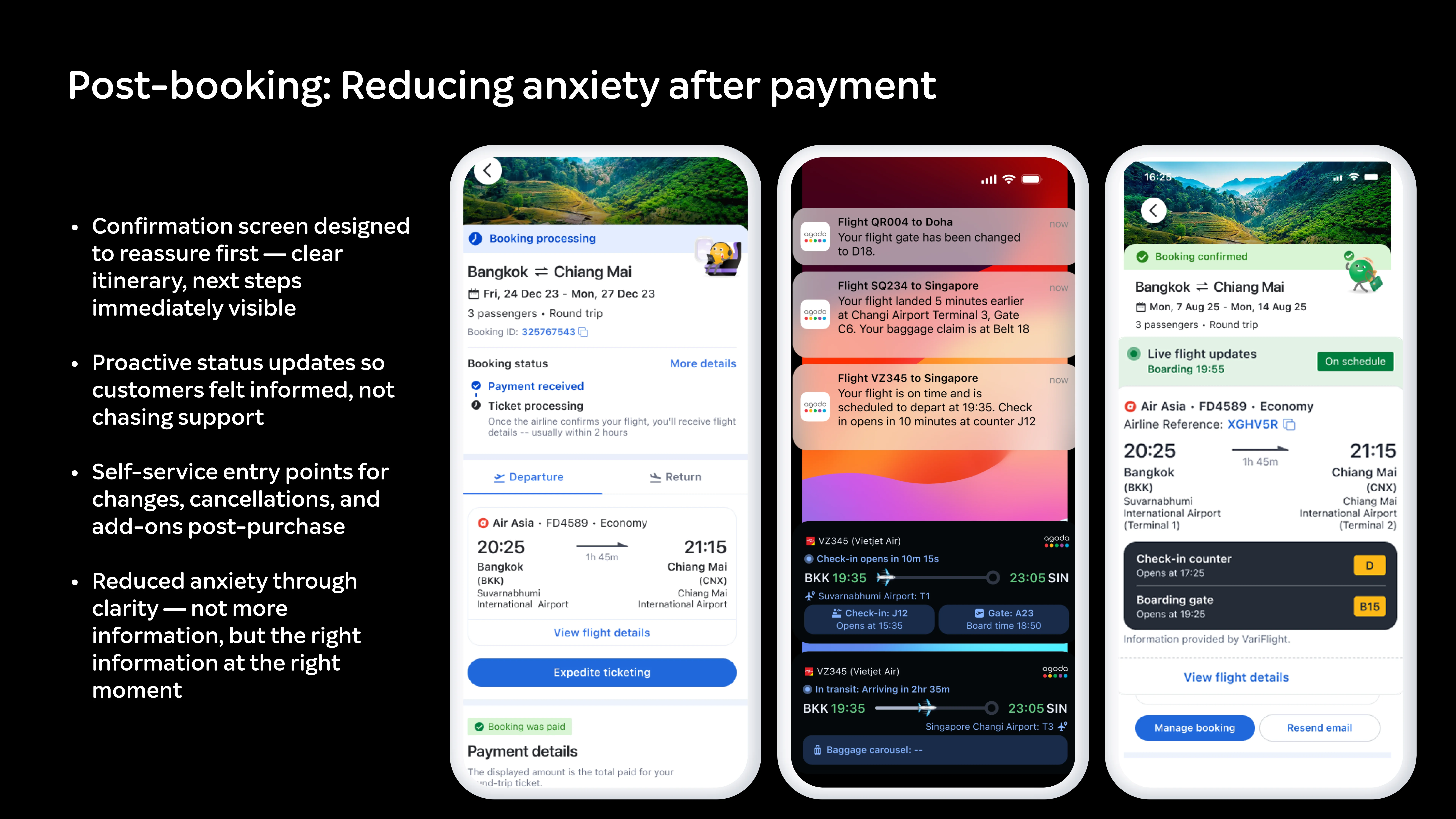
Keep travelers informed, not anxious
After booking, the job isn't done — it's just shifted. Customers want to know their trip is on track without having to chase it down. I designed the post-booking experience to surface what matters most at the right moment: live flight status, gate and check-in details, and a clear view of every leg of their journey, all without unnecessary noise.

The Outcome & Business Impact
Flights launched from zero in 2019. Here's where the product stands today.
70% YoY
Booking volume growth
Sustained growth since launch — built from the ground up in 2019
12.8%
Ancillary Attach Rate
Share of bookings with at least one add-on — a direct signal of trust and product completeness
Positive
Net Contribution
Flipped from negative — the product now earns more than it costs to operate
How we got there
Roadmap Reprioritization
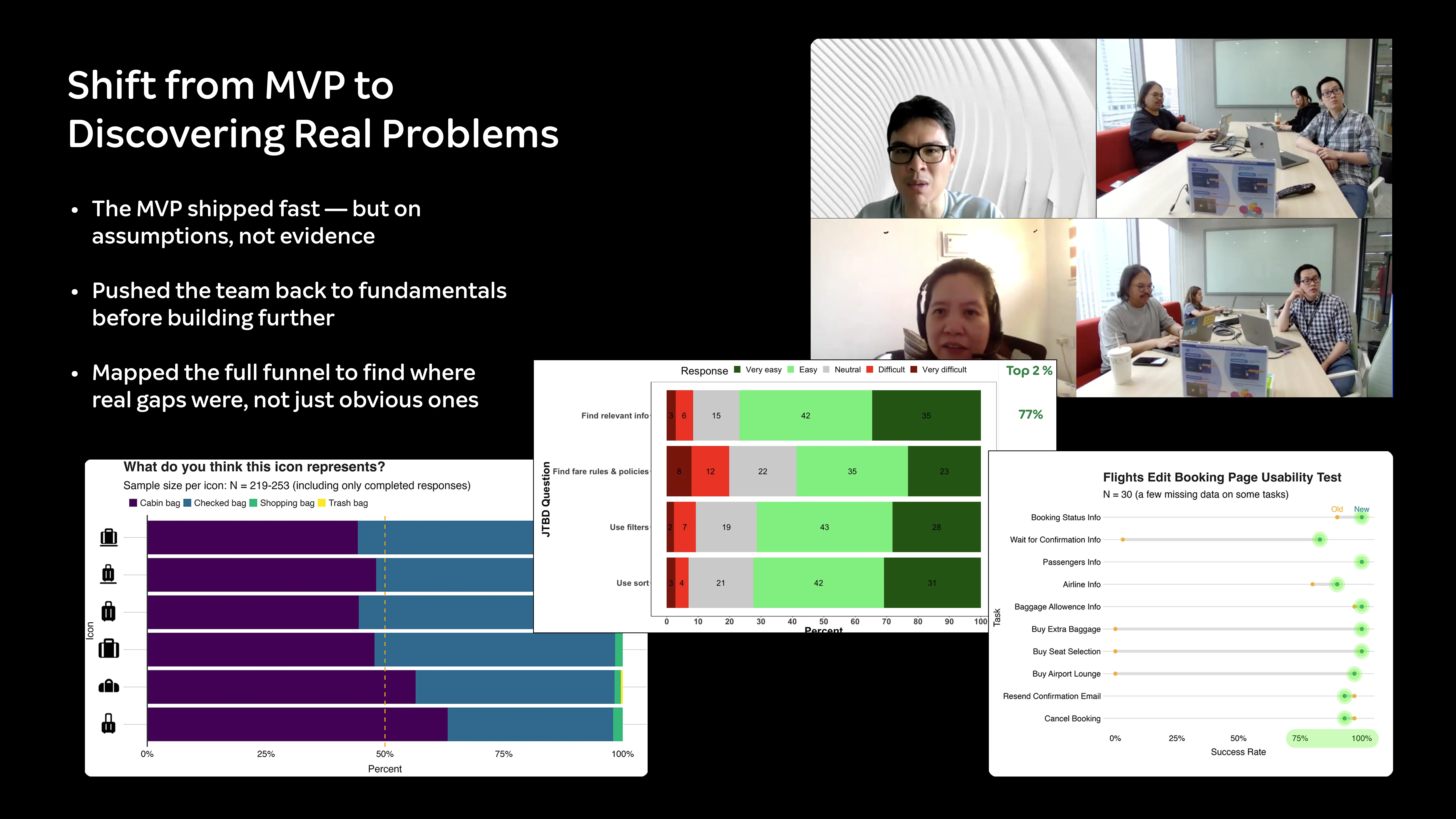
By linking UX failures to real costs — rising churn and customer service load — I made the case to exec leadership to reprioritize around core experience debt, unlocking resources to fix what was hurting the business, not just ship what was planned.
Trust and Conversion
Resolving deep-rooted experience debt — confusing flows, unclear pricing, missing reassurance — rebuilt user confidence at the moment of booking. The 7.2% bag attach rate is a key proxy: users who add bags are users who trust the product enough to commit.
Ancillary and Revenue Growth
As trust improved, ancillary revenue followed. A 12.8% attach rate across bags, seats, and add-ons directly contributed to flipping net contribution positive — turning flights from a cost centre into a growth engine for Agoda.
Glimpse of Outputs